The 3:04
For eleven months I watched an empty road for a living, and the only thing that ever happened on it happened at four minutes past three.
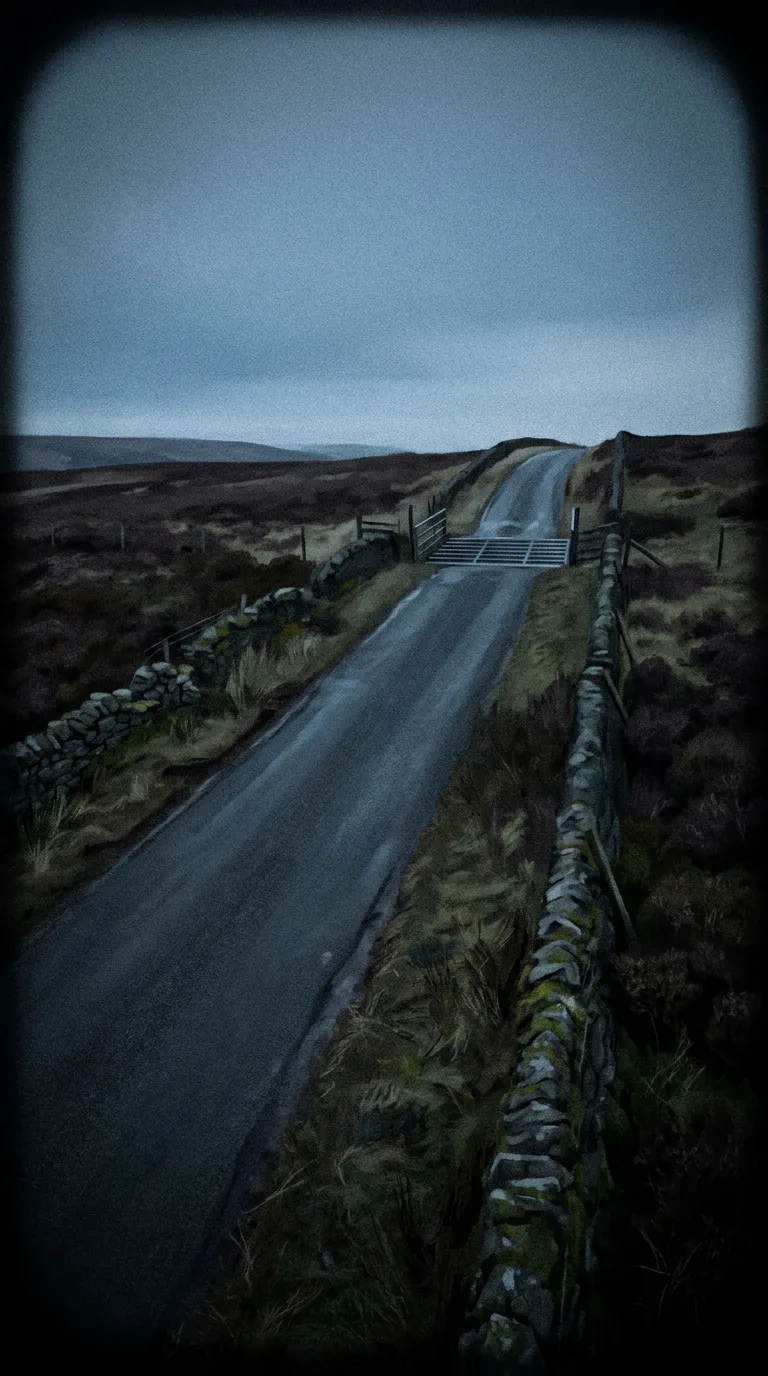
The job was real, which surprises people. The council had put a camera on the Fell Road after the third fatality in two years, and somebody in an office decided that a camera nobody watched was a liability, and so there was a night post at the depot in Kirkby: eleven at night until seven, four screens, a kettle, and a logbook you filled in every hour whether anything had happened or not.
Nothing happened. That was the job. The Fell Road carries perhaps forty vehicles between eleven and seven, and most of them are in the first hour, and after one in the morning you can go a whole shift and see nine.
Except the 3:04.
A car came over the cattle grid at the top of the road at four minutes past three, every night, and went down past the camera and out of frame toward Dent. Dark saloon, older shape. It never varied by more than about forty seconds. I noticed it in my second week, the way you notice anything in a job where noticing is the entire content of the work, and I started logging it because logging things was what the logbook was for.
03:04 — vehicle, southbound, no incident.
Four hundred and some nights of that.
---
I want to be careful about how I say the next part, because I have told it badly before.
I was not frightened of the 3:04. It was the opposite. In a job like that your night has no shape — there is no lunch, nothing arrives, nobody phones — and the 3:04 gave it one. It was the middle of my night. Before it I was getting through; after it I was getting home. Some nights I made tea at ten to three so I would have it in my hand.
I did not think about who was driving. I want to be honest about that too, because it is the part people don't believe. You do not think about who is driving a car at three in the morning any more than you think about who is inside a passing train. It was a car on a road. It came over the grid, the headlights swung with the camber, it passed under the camera and was gone.
I thought about it exactly once, in the spring, when I mentioned it to Denise who did the Tuesdays and Wednesdays.
"The three o'clock?" she said. "Aye."
"Every night?"
"Far as I know."
"Doesn't that seem —"
"Somebody works nights," she said, in the tone of a woman who has been asked whether the sun always comes up. "There's a lot of us."
Which was so obviously and completely correct that I was embarrassed to have raised it, and I did not raise it again.
---
On the eighth of November it did not come.
I noticed at about ten past. I remember the specific quality of the noticing: not fear, just a small wrongness, like reaching for a step that isn't there. I checked the time on the screen against my phone. I checked the camera feed was live, which you do by looking at the trees — there is always something moving in the trees.
At twenty past I logged it, because that was the job.
03:04 — no vehicle.
I sat and I watched the road until seven, and nothing came down it at all, and I drove home in the light feeling foolish and slightly hollow, the way you do when a small routine breaks.
It did not come the next night either.
Or the next.
---
I am going to skip forward, because the middle of this is just eleven nights of a woman watching an empty road and taking it personally, and there is no dignity in it.
On the nineteenth I went up there in the daylight.
The Fell Road is a good road in the day. It runs up over the tops with drystone on both sides and the view opens out at the cattle grid and you can see most of the way to Sedbergh. I parked on the verge below the camera post and I walked up to the grid and back, and I do not know what I expected to find, and I found nothing, because there was nothing to find.
On the way back down I stopped at the place where the road bends above the beck, because there were flowers tied to the wall.
They were old. That is what I noticed first — not the fact of them but the age. The cellophane had gone white and split and the wire had rusted into the stone, and whatever had been inside it had been gone for years. Underneath, low down, somebody had screwed a small brass plate to the wall, the kind you get done at a trophy shop.
It had a name on it, and two dates, and the second date was the eighth of November.
I did the arithmetic standing there in the road with my hand on the wall. Nine years.
---
I did one more shift.
I do not really know why. I have told myself since that I wanted to be sure, but I do not think that is true; I think I wanted it back, and I am aware of how that sounds.
I made the tea at ten to three. I sat with it and I watched the top of the road where the grid is, and at four minutes past three nothing came over it, and I sat there with a cup going cold in my hands and understood, in a way I had managed for eleven months not to understand, exactly what I had been logging.
Not a car that came every night for eleven months.
A car that came every night for nine years, and had now got where it was going.
---
I gave my notice the following week. They were good about it. Denise took the extra nights and I have not asked her about the road and she has not offered.
I sleep at night now, which took about a year to learn again.
The thing I have not been able to put down — the thing I turn over when I am awake at three, which is more often than I would like — is not the car, or the plate on the wall, or the nine years.
It is that for eleven months I sat in a warm room and watched a stretch of road that nobody else in the world was watching, and I made a cup of tea to have ready, and I marked it down every single night in a book, at four minutes past three, without fail, the way you would if you were waiting up for somebody.
And on the eighth of November it stopped.
And I have never been able to decide whether that was the end of something that had been going on for nine years without me.
Or whether it had been waiting all that time for somebody to notice it, and count it, and write it down.
And whether, when I finally did, that was enough.
 Read next
The Weight
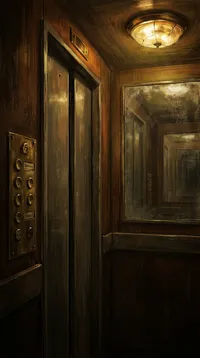
The lift in her building holds eight people, and about once a fortnight it thinks there are nine.
Read next
The Weight
The lift in her building holds eight people, and about once a fortnight it thinks there are nine.
Get the next one first
A new horror story every week, free, straight to your inbox. Subscribers read each one before it appears anywhere else.